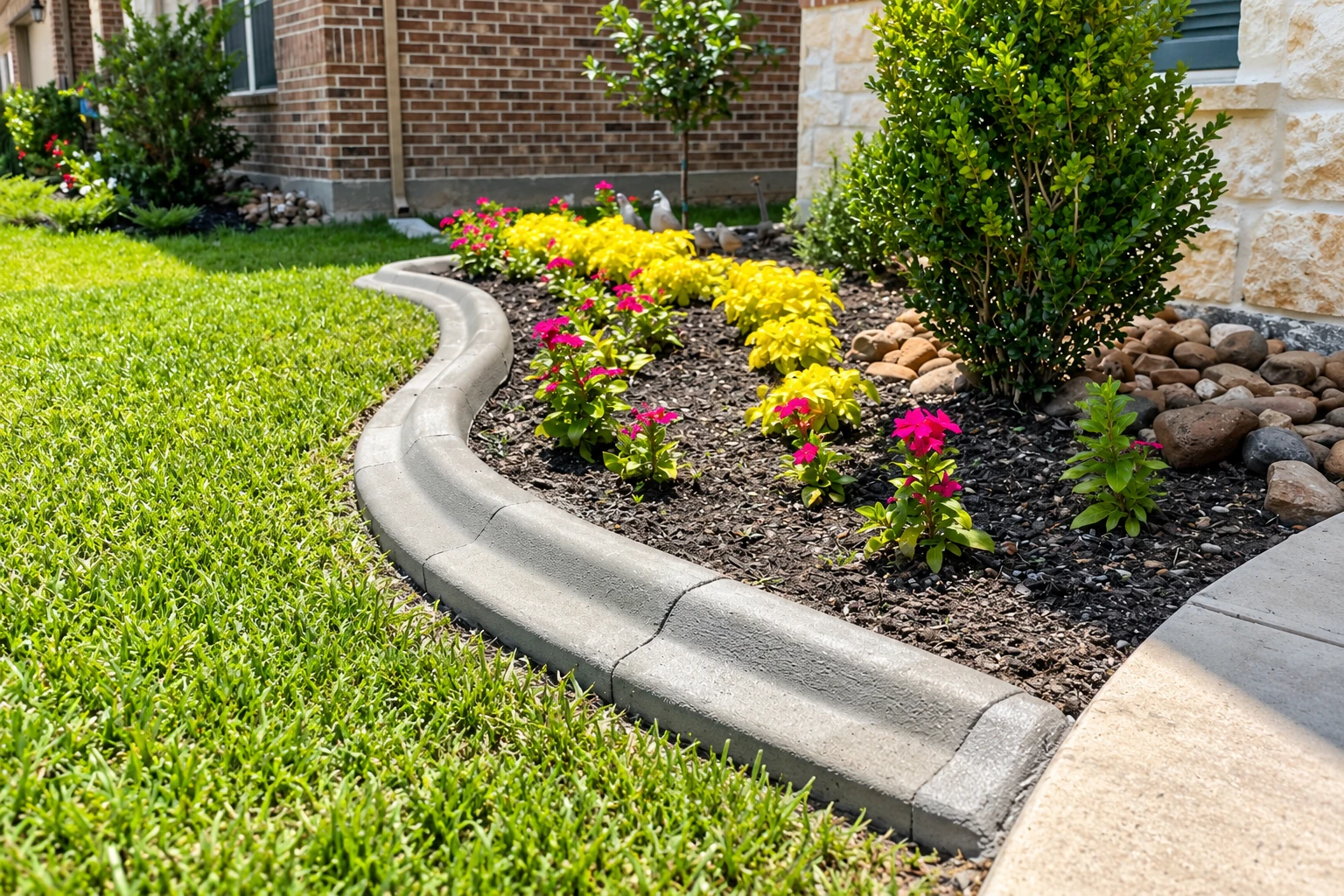
Concrete retaining walls in Wellington FL - a wall that holds back the yard and drains
Soil slipping or a slope washing out? We pour retaining walls from a proper design, with a clear way for water to escape.
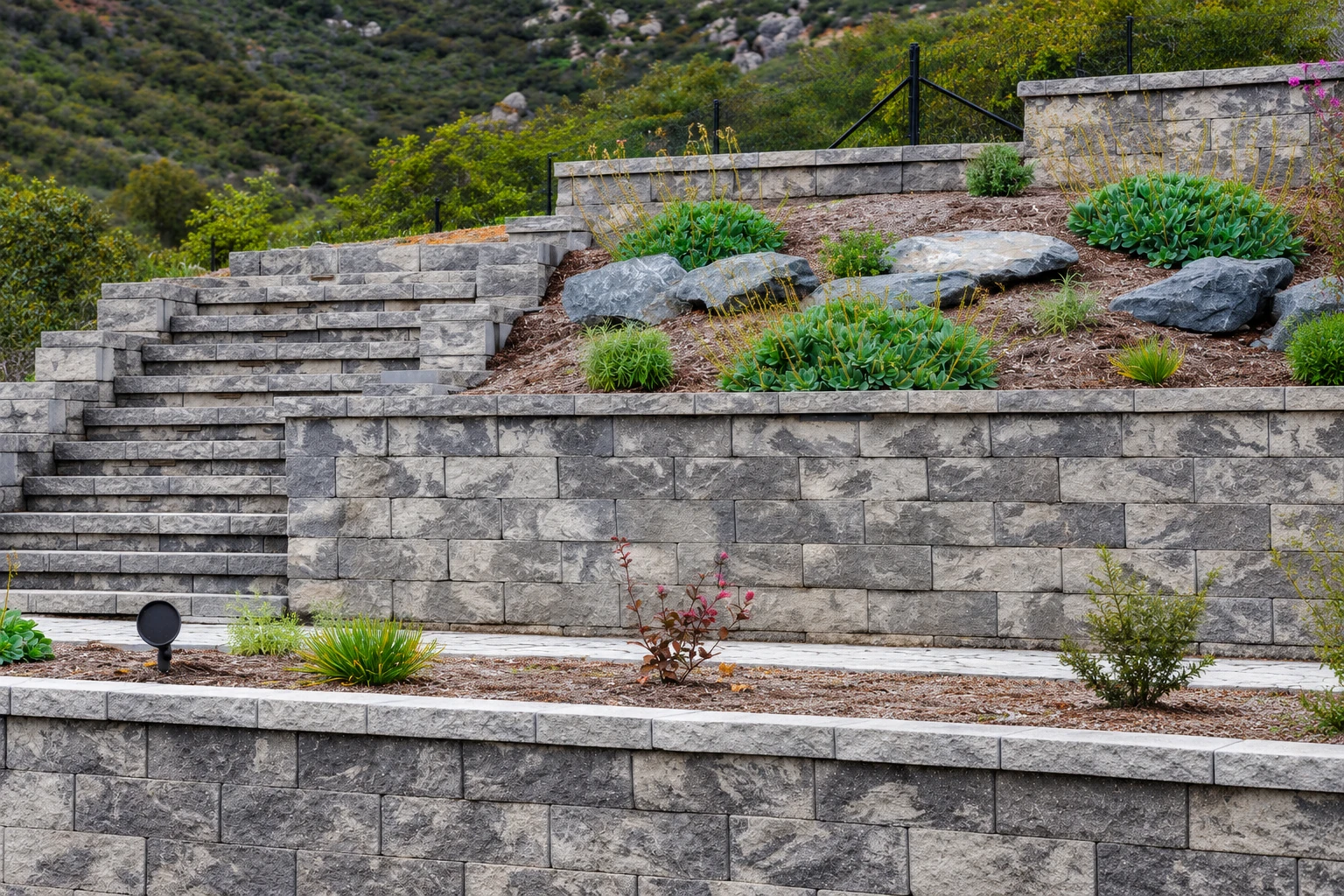
A concrete retaining wall holds soil back. Here's when you need one.
A concrete retaining wall is poured where it will stand and holds back soil so the ground on one side can sit higher than the other. It rests on a footing, the wider concrete base under it, with steel and drainage built in. At Optimum Wellington Concrete, we build them in Wellington and cities across Palm Beach County.
Most people call about a bank that keeps washing out or an old wall starting to lean, often to make a level spot for a pool deck or a shed with a concrete floor. Walls that fail usually weren't short on concrete. They were sized by height alone, or water had no way out from behind them.
Height, length, curves, digging out an old wall and any decorative face move the price. The schedule turns on the design, any permit and the wait before soil goes back behind the wall. I want the footing and steel to come from a proper design, and your written estimate spells out what's included.
Watch the slope first. These signs point to a retaining wall.
Soil sliding onto the lawn
When dirt or mulch keeps creeping down a bank after every rain, the slope can't hold itself up. Each storm takes more, and the fix grows as the edge gets closer to a patio, fence or driveway.
An old wall leaning or cracking
A lean or long cracks usually mean soil and water are pushing harder than the wall was built for. Waiting lets it tip further, and a wall that falls takes the ground behind it along.
Water pooling along the bottom
Puddles or soggy ground at the foot of a slope or wall often mean water has nowhere to go. It keeps softening the soil and adding weight, so the trouble usually grows.
Here's how a retaining wall job goes. It starts with a visit.
You call, and I come out to look at the slope myself, ask what you want the wall to do and answer your questions. I'll also look at where water runs, because that shapes the drainage. Then you get a written estimate that spells out what's included and shows how water will get out from behind the wall.
I'm on site leading our crew through the build. We dig and pour the footing, set the steel, then form and pour the wall. Backfill, the soil packed back behind it with the drainage gravel, waits until the wall has gained strength, and good practice is to pack it in layers so heavy machines don't overload young concrete.
When it's done, I walk the wall with you and show you the weep holes, the small drain openings, and the pipe that let water out, so you know how to keep them clear. We clean up the site before we go.
Planning a concrete retaining wall? Tell us about the slope.
Send the wall's rough length, height and photos of the slope, or call (561) 268-0415. We reply within one business day to set a free, no-obligation estimate on site.
(561) 268-0415Retaining walls in Wellington start with the rules. Here's what applies.
Plans and permits here go through Wellington's Building division, which holds work to the Florida Building Code and Wellington's own standards. Whether your wall needs a permit is that office's call, so we check at the start, and if it does, we pull it as your licensed, fully insured contractor. Palm Beach County also advises holding the final payment until the permit is closed out.
We build walls the same way in Royal Palm Beach and Greenacres, wherever a yard needs leveling or a bank needs holding back.
Questions about retaining walls? Start with these answers.
Read through the answers below, and if your question isn't here, call (561) 268-0415 and I'll talk it through with you.
What does a poured concrete retaining wall cost near Wellington, FL?
Cost guides put a poured concrete retaining wall in the West Palm Beach area at about $30 to $44 per square foot of wall face, the side you see. Your own price comes in writing after I've seen the slope, because height, length and access change it a lot.
Is a block retaining wall cheaper than poured concrete?
Often, yes. One masonry industry manual says stacked block walls typically cost 25 to 40 percent less than poured walls, though one block maker's guide says walls over 4 feet or under heavy loads need extra soil reinforcement and often a professional design. Price both if you're open to either, and if block suits your yard better, I'll say so.
Why does drainage behind a retaining wall matter so much?
Water trapped behind a wall can greatly increase the load on it and cause leaks. Good practice calls for drainage gravel, a filter layer, perforated pipe outlets and ground that sheds water, so ask every contractor how their quote handles it. I'll show you where the water goes on yours.
How do I take care of my retaining wall's drainage?
Check the weep holes and pipe outlet twice a year and after heavy rain, making sure water is coming out of them. Drainage usually works for years with little attention, but a clogged outlet lets water build up behind the wall, which is the pressure the drainage is there to relieve.
Got a slope that won't stay put? Call Optimum Wellington Concrete.
Tell us the wall's rough length and height on the phone, or send a few photos through the form, and we'll set a time to come look.
Mon–Fri: 6 AM–9 PM, Sat–Sun: 7 AM–9 PM